On our tendency to explore: Part I
On our tendency to explore: Part I
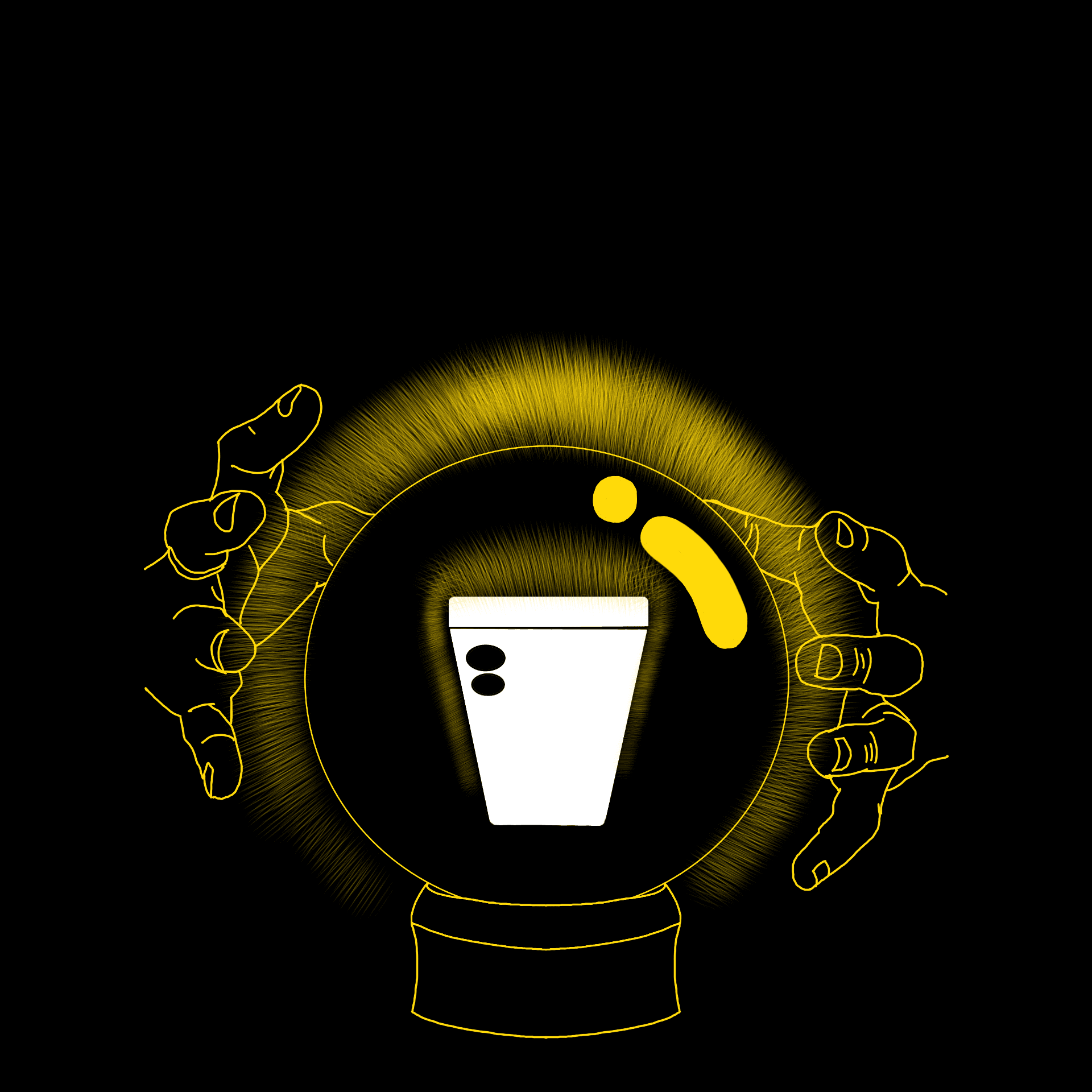
For thousands of years, humans lived as wanderers. Curiosity led to exploration of new horizons. But curiosity alone isn't enough. Curiosity can make you ask the questions, but it takes courage to seek the answer.
Why courage? Because most of life's answers aren't straightforward. Exploration of the new leads to failures that can take generations to overcome. But it's not just grand questions of the universe's deepest secrets that demand courage. Perhaps we ought to be amused by the fact that anxiety can follow existential dread just as easily as it can the realization about a missing key for a cheap bike.
The lessons to deal with anxiety and failure, and anxiety of failure, come with life and they can sometimes be very hard to tackle alone, and we learn to rely on our loved ones to get us through these times.
I have always been an anxious person, especially in social situations. Although I have learned to manage my anxiety now, I was quite an anxious kid. Oftentimes, I sought to eliminate my anxiety by preparing myself for each and every circumstance beforehand by scouring the Internet for all the information I could find about the event, even looking for a possibility to accomplish the said work digitally. These were situations such as applying for a driver's license, applying for a passport, taking the train to someplace new, driving a new type of car, etc. I was looking for a way to manage everything from within the four walls of my bedroom. While something can be said in favor of getting to a point of “preparedness”, obviously the Internet could not help me prepare for most social situations because social interactions flow in an unpredictable, and quite human, manner.
The only thing that ended up helping me manage this form of anxiety was showing up and learning from my failure. I cannot imagine how different of a person I would have turned out to be if my anxiety had a freezing effect on me, to the extent that it stopped me from doing things. If something could be done online beforehand to reduce my IRL (in real life) stress, I would be sure to do it. I was fortunate that my parents, especially my dad, were there to push me to go out and deal with the real world, even if it led to confrontations and uncomfortable situations.
The Problem
With the growing involvement of tech in our daily lives, the Internet, which once served as a tool to make long-distance social connections, now serves as a social handicap, trying to replace social interactions with packaged content, tuned to a person’s digital appetite. What used to be a balanced diet, is now just junk slop.
But the larger fight is currently against companies, not individuals. It is against organizations who were meant to share in the absurd and amusing Internet of lives, not hijack it and gut the parts of it that made it human.
This monster of a machine that came after humanity was ripped out of it still wants us to fund and feed it, while it returns nothing but garbage.
To what extent?
I do not know.
Is this all just for advertising in the end?
What a waste of human potential.
We still look back at the announcement of the iPhone and fondly remember the improvements it brought forth. Now, decades later, we have a computer in our pockets that is multiple times more powerful than the computers used in world war 2. Now for just a moment, try to keep the raw hardware specs of your phone aside, and think solely from the perspective of utility. What do we mostly use this insanely powerful computer for? We are stuck to these screens that are used as portals to our attention by advertising companies and influencers, for the most part. Whatever productive or creative utility is left of these devices, we have to struggle against these time-stealers to maintain and extract it. Most of the days, we come away from these screens looking exhausted, stressed and regretful about the time spent on callous things.
Even though everything does not need to have a digital alternative, doing so opens up new avenues of revenue generation, therefore profit-seeking entities will not stop their crusade of digitization. Also, thanks to huge investment in AI and data centers, they are in too deep to give up. So, they will do everything in their power, and they have too much of it already, to increase our tech addictions.
Not every little sign of impatience can be blamed on Instagram!
True.
But the paranoia leading to such a tendency to blame is a result of years of exploitation of our data, trust and privacy by these companies.
The small fights we win against anxiety and failure while growing up, result in confidence and courage later in life. Dealing successfully with these feelings results in a certain calm, a feeling that we are capable of handling our battles. Tech companies are taking this away from the newer generation. The phrase “touch grass” is not a meme anymore, but serious advice.
Although the speed of growth is subjective, all people grow through challenges. The capability to handle stress and give something your undivided attention is hindered when you have a device at your whim which can help you escape. If we are not careful, and if no one is there to guide us, we can easily fall into the trap of involuntarily turning to certain apps to avoid feeling anxious, rather than build up resilience to fight the anxiety and carry ourselves through tough times. Although the internet can be helpful and people can be kind, it is harder than ever to reach out to known and vetted people online if you don't already have a community built on trust. More often than not, we find ourselves lost in the labyrinth of curated and mostly lazy content, which might be fueled by complete strangers, or worse - bots.
Moreover, how many times do we give up on doing something just because the internet pointed out all the negative aspects of the experience, or somehow it managed to convince us that the experience just wasn’t worth it, all through first-hand accounts (could even be fake) of other people.
Usually, a pleasurable experience benefits from reactions and publicity. This is not true of experiences that are expected to be tedious, frustrating, boring, anxiety-inducing, challenging, etc. These experiences intimidate us, and each and every reminder of them works as a warning sign. When we use technology to prepare ourselves in advance of an upcoming challenge, we start with good intentions, but unfortunately the tech itself has evolved into something that is detrimental.
The Internet tries to answer every question we have, not just the ones worth asking. As we enter a trance that is catalyzed by our tendency to explore, we fill our minds with second-hand experiences. These experiences transform into mental baggage, keeping us from going out of our shell to witness things first-hand and form our own judgement.
With the rise of AI, companies will be able to answer each and every question asked on the Internet. The answers don't have to be right, they just have to exist. Given that the current formula is to agree with whatever the user tells the AI, the echo chamber is set to become louder and more monotonous. Critical thinking skills are more important than ever, but to develop these skills, one needs to be able to shut everything off and spend time with oneself, but between working and browsing, that time is seldom realized.
In most cases, seeking advice from the Internet is seen as saved time and effort, and in some cases, it can even be true. But everything is bad in excess. Sometimes, even though we end up with the same result as the majority when trying something new, we might learn a thing or two about ourselves, and THAT makes new things worth doing, instead of relying on the experience of others.
I understand the need to save time in a period where we are losing most of it to work and worry. All this stress keeps us locked in a cage, and it's very difficult to break free, and it can also seem counter-productive to do so.
“I don’t have time to see if I am an oil, water or acrylic person, so I will just follow this random account’s advice and stick to one”
“I don’t have time to read that book, so I will just get an AI summary”
“I have an eclectic taste in music but my favorite content-creator on YouTube said that all music is bad today, so I will stick to the old hits”
All of these are reasonable wishes, but they are obviously restrictive. Even though spending time on something takes time away from our day, we owe it to ourself to do things that make us happy and revel in the joy of childlike exploration, because rather than just finding a good paint, a good book or a hit song, we will end up finding something that challenges us at a deeper level and opens up a whole new avenue of possibilities and creativity. These experiences become a part of our palette, which we then use to paint on the blank canvas of our lives and once we fill it up, we have a beautiful work of art to cherish. The anxiety or failures that come with it are just stepping stones, and they are not as bad as you think.
For thousands of years, humans lived as wanderers. Curiosity led to exploration of new horizons. But curiosity alone isn't enough. Curiosity can make you ask the questions, but it takes courage to seek the answer.
Why courage? Because most of life's answers aren't straightforward. Exploration of the new leads to failures that can take generations to overcome. But it's not just grand questions of the universe's deepest secrets that demand courage. Perhaps we ought to be amused by the fact that anxiety can follow existential dread just as easily as it can the realization about a missing key for a cheap bike.
The lessons to deal with anxiety and failure, and anxiety of failure, come with life and they can sometimes be very hard to tackle alone, and we learn to rely on our loved ones to get us through these times.
I have always been an anxious person, especially in social situations. Although I have learned to manage my anxiety now, I was quite an anxious kid. Oftentimes, I sought to eliminate my anxiety by preparing myself for each and every circumstance beforehand by scouring the Internet for all the information I could find about the event, even looking for a possibility to accomplish the said work digitally. These were situations such as applying for a driver's license, applying for a passport, taking the train to someplace new, driving a new type of car, etc. I was looking for a way to manage everything from within the four walls of my bedroom. While something can be said in favor of getting to a point of “preparedness”, obviously the Internet could not help me prepare for most social situations because social interactions flow in an unpredictable, and quite human, manner.
The only thing that ended up helping me manage this form of anxiety was showing up and learning from my failure. I cannot imagine how different of a person I would have turned out to be if my anxiety had a freezing effect on me, to the extent that it stopped me from doing things. If something could be done online beforehand to reduce my IRL (in real life) stress, I would be sure to do it. I was fortunate that my parents, especially my dad, were there to push me to go out and deal with the real world, even if it led to confrontations and uncomfortable situations.
The Problem
With the growing involvement of tech in our daily lives, the Internet, which once served as a tool to make long-distance social connections, now serves as a social handicap, trying to replace social interactions with packaged content, tuned to a person’s digital appetite. What used to be a balanced diet, is now just junk slop.
But the larger fight is currently against companies, not individuals. It is against organizations who were meant to share in the absurd and amusing Internet of lives, not hijack it and gut the parts of it that made it human.
This monster of a machine that came after humanity was ripped out of it still wants us to fund and feed it, while it returns nothing but garbage.
To what extent?
I do not know.
Is this all just for advertising in the end?
What a waste of human potential.
We still look back at the announcement of the iPhone and fondly remember the improvements it brought forth. Now, decades later, we have a computer in our pockets that is multiple times more powerful than the computers used in world war 2. Now for just a moment, try to keep the raw hardware specs of your phone aside, and think solely from the perspective of utility. What do we mostly use this insanely powerful computer for? We are stuck to these screens that are used as portals to our attention by advertising companies and influencers, for the most part. Whatever productive or creative utility is left of these devices, we have to struggle against these time-stealers to maintain and extract it. Most of the days, we come away from these screens looking exhausted, stressed and regretful about the time spent on callous things.
Even though everything does not need to have a digital alternative, doing so opens up new avenues of revenue generation, therefore profit-seeking entities will not stop their crusade of digitization. Also, thanks to huge investment in AI and data centers, they are in too deep to give up. So, they will do everything in their power, and they have too much of it already, to increase our tech addictions.
Not every little sign of impatience can be blamed on Instagram!
True.
But the paranoia leading to such a tendency to blame is a result of years of exploitation of our data, trust and privacy by these companies.
The small fights we win against anxiety and failure while growing up, result in confidence and courage later in life. Dealing successfully with these feelings results in a certain calm, a feeling that we are capable of handling our battles. Tech companies are taking this away from the newer generation. The phrase “touch grass” is not a meme anymore, but serious advice.
Although the speed of growth is subjective, all people grow through challenges. The capability to handle stress and give something your undivided attention is hindered when you have a device at your whim which can help you escape. If we are not careful, and if no one is there to guide us, we can easily fall into the trap of involuntarily turning to certain apps to avoid feeling anxious, rather than build up resilience to fight the anxiety and carry ourselves through tough times. Although the internet can be helpful and people can be kind, it is harder than ever to reach out to known and vetted people online if you don't already have a community built on trust. More often than not, we find ourselves lost in the labyrinth of curated and mostly lazy content, which might be fueled by complete strangers, or worse - bots.
Moreover, how many times do we give up on doing something just because the internet pointed out all the negative aspects of the experience, or somehow it managed to convince us that the experience just wasn’t worth it, all through first-hand accounts (could even be fake) of other people.
Usually, a pleasurable experience benefits from reactions and publicity. This is not true of experiences that are expected to be tedious, frustrating, boring, anxiety-inducing, challenging, etc. These experiences intimidate us, and each and every reminder of them works as a warning sign. When we use technology to prepare ourselves in advance of an upcoming challenge, we start with good intentions, but unfortunately the tech itself has evolved into something that is detrimental.
The Internet tries to answer every question we have, not just the ones worth asking. As we enter a trance that is catalyzed by our tendency to explore, we fill our minds with second-hand experiences. These experiences transform into mental baggage, keeping us from going out of our shell to witness things first-hand and form our own judgement.
With the rise of AI, companies will be able to answer each and every question asked on the Internet. The answers don't have to be right, they just have to exist. Given that the current formula is to agree with whatever the user tells the AI, the echo chamber is set to become louder and more monotonous. Critical thinking skills are more important than ever, but to develop these skills, one needs to be able to shut everything off and spend time with oneself, but between working and browsing, that time is seldom realized.
In most cases, seeking advice from the Internet is seen as saved time and effort, and in some cases, it can even be true. But everything is bad in excess. Sometimes, even though we end up with the same result as the majority when trying something new, we might learn a thing or two about ourselves, and THAT makes new things worth doing, instead of relying on the experience of others.
I understand the need to save time in a period where we are losing most of it to work and worry. All this stress keeps us locked in a cage, and it's very difficult to break free, and it can also seem counter-productive to do so.
“I don’t have time to see if I am an oil, water or acrylic person, so I will just follow this random account’s advice and stick to one”
“I don’t have time to read that book, so I will just get an AI summary”
“I have an eclectic taste in music but my favorite content-creator on YouTube said that all music is bad today, so I will stick to the old hits”
All of these are reasonable wishes, but they are obviously restrictive. Even though spending time on something takes time away from our day, we owe it to ourself to do things that make us happy and revel in the joy of childlike exploration, because rather than just finding a good paint, a good book or a hit song, we will end up finding something that challenges us at a deeper level and opens up a whole new avenue of possibilities and creativity. These experiences become a part of our palette, which we then use to paint on the blank canvas of our lives and once we fill it up, we have a beautiful work of art to cherish. The anxiety or failures that come with it are just stepping stones, and they are not as bad as you think.
Home
Blog
Art
Shop
About
On The Ethics Of Tech
Home
Blog
Art
Shop
About
Ethically Speaking